The UAE Advertiser Permit is a licence for individuals who publish advertising on social media or other digital platforms, paid or free. The National Media Authority now runs it, and the old UAE Media Council site, uaemc.gov.ae, redirects there. At launch, Gulf News and The National reported an exemption for people who promote a business they own on their own personal accounts. An AI presenter cannot apply for a permit, so with AI UGC ads the question becomes whose account publishes each ad. Each platform's AI label applies on top of that.
What the permit covers, according to the regulator
The National Media Authority (NMA) describes the Advertiser Permit (opens in a new tab) as a permit that allows individuals to publish advertising and media content through their social media accounts, websites or other digital platforms, "either for compensation or free of charge". Applicants need a clean record and a completed training programme, and their content has to meet the national media content standards. The documents list asks for a digital ID, a passport, a personal photo and a commercial licence.
The fee is waived for the first three years and is AED 1,000 after that, and the page quotes three working days to process an application. Visiting creators apply for a separate permit through a licensed advertising agency in the UAE. It costs AED 500, lasts three months and can be extended to six months in total. Gulf News reported that the requirement became mandatory on 1 February 2026.
The service page lists no exemptions. The own-business exemption comes from the launch coverage: The National, quoting the state news agency WAM, worded it as "any individual who promotes a product or service of their own or a company they own through their personal account", and Gulf News printed the same rule. If your plans depend on it, keep a copy of that wording or ask the NMA to confirm it for your case.
Whose account posts the ad decides who needs a permit
Sort every placement by the account that publishes it. These five cases cover most SaaS teams.
- Your personal account, promoting a company you own. This matches the exemption as reported. A founder posting a product demo on their own Instagram or LinkedIn profile fits the wording.
- Your company page, running paid ads. The NMA page describes a permit for individuals and says nothing about company ad accounts. Gulf News's February 2026 explainer says the rules apply to "individuals and businesses publishing content online", so ask the NMA before you treat brand-page ads as outside the scheme.
- A resident creator you pay to post. The creator needs a valid permit and should show the permit number on their profile. Gulf News reports that organisations must check this, and officials quoted by The National asked companies to work only with licensed people. The National also reported that influencers working for money in Abu Dhabi need a permit specific to the emirate.
- A visiting creator. They need the visiting permit, filed through a licensed UAE advertising agency. Agree who applies, and who pays the fee, before the posting date.
- Staff posting on their own profiles. The exemption as reported covers a company the person owns, so it does not obviously extend to employees. Check before you ask your team to post ads from their personal accounts.
What an AI presenter adds to the check
A synthetic presenter cannot hold a permit and has never used your product. The account that publishes the ad answers for every line the presenter speaks. Two points from the NMA apply directly to AI video.
- AI likenesses of national symbols and public figures need prior official approval. Khaleej Times reported on 30 September 2026 that the NMA treats generating them without approval as a breach of the media content standards. The same report says the authority reserves the Emirati kandura for Emiratis in advertising and promotional social media content. Keep AI presenters out of national dress.
- The media content standards apply to the content itself. The NMA lists 20 of them. For AI ads, two stand out: nothing "incorrectly attributed to entities or persons", and advertising that respects "the culture, identity, and values of the UAE". The list does not mention AI by name.
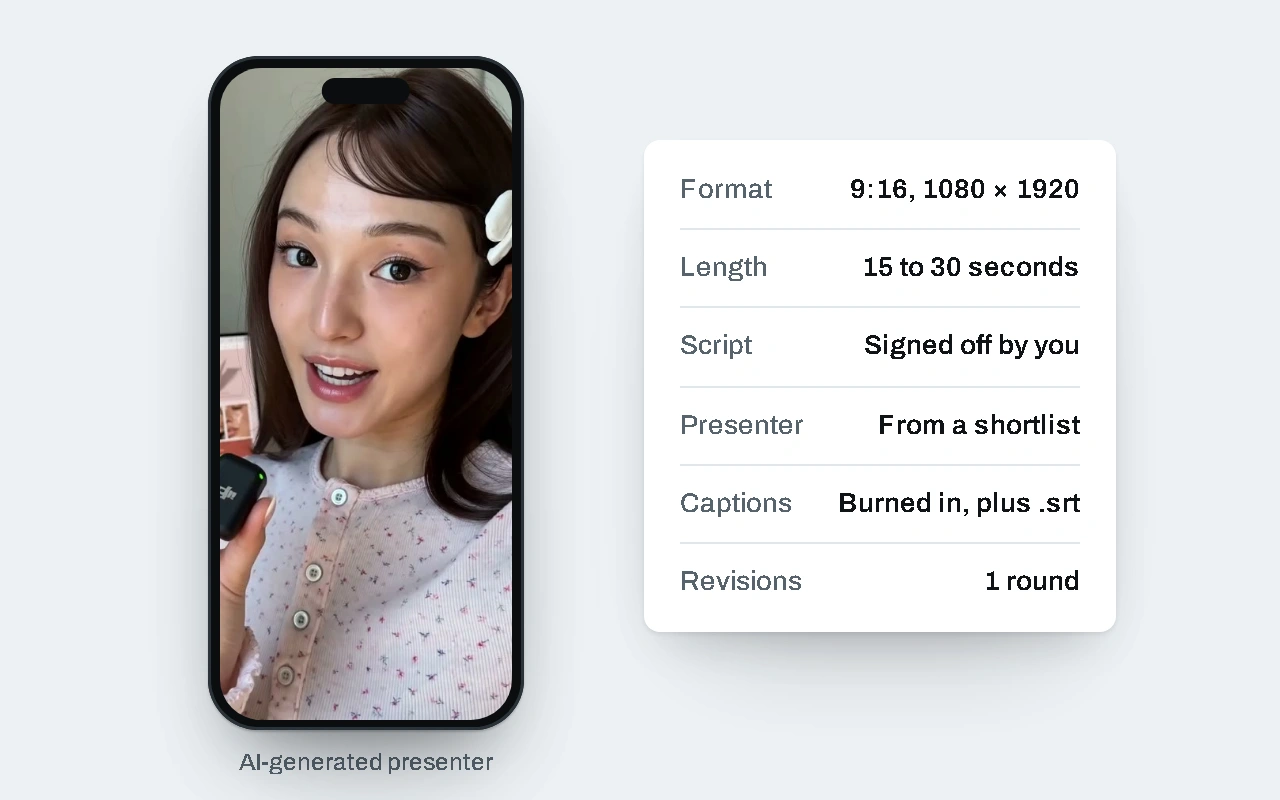
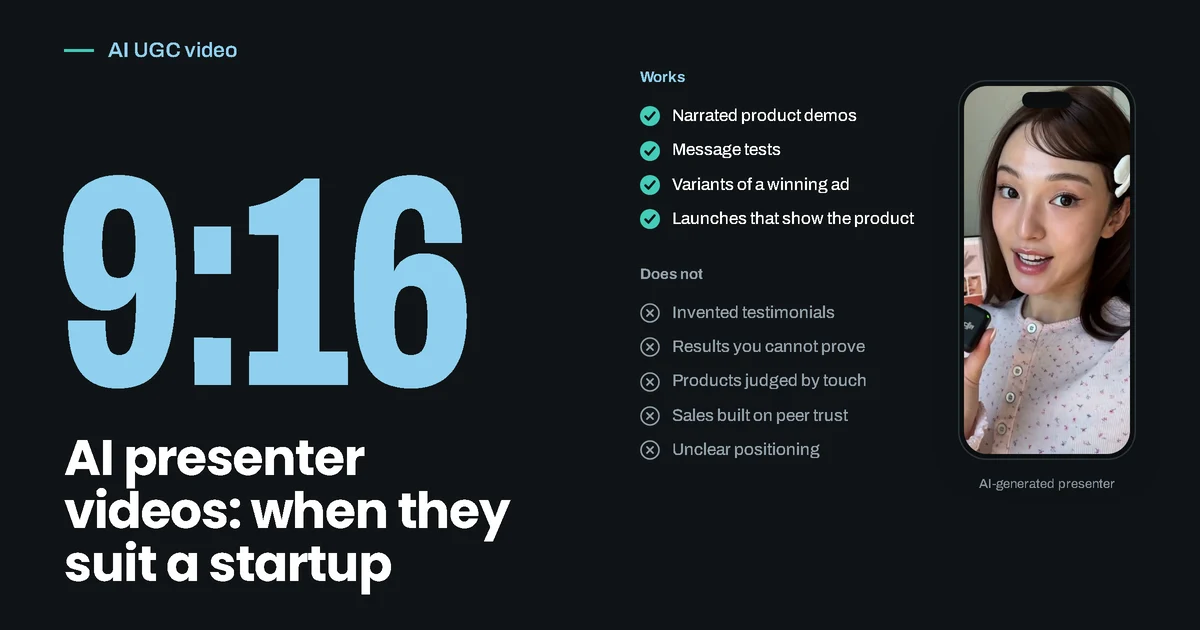
Our reading: an AI presenter speaking as a customer who has used your product is the risky case. Give first-person results to real customers who agreed to be quoted, and let the AI presenter explain what the product does. Our own scripts follow that rule, and on the AI UGC Video Bundle the delivery notes flag every presenter as AI-generated, so whoever publishes the ads has a record. The wider case for and against the format is in when AI UGC works and when it fails.
Meta, TikTok, YouTube and Google label AI ads in different places
The permit is a UAE rule. AI labels are platform rules, and they apply wherever the ad runs. Read the live pages before launch: Meta updated its ads post on 1 June 2026, and Google posted new labelling rules in July 2026.
Meta
Meta's ads transparency post (opens in a new tab) says it will detect ads made with third-party AI tools through industry-standard signals and add an "AI info" label inside "About this ad", in the three-dot menu. When an ad made with Meta's own AI tools includes an AI-generated photorealistic human, the label sits next to "Sponsored" instead. Meta notes that the experience may vary by region, so preview your ads in the markets you buy.
TikTok
TikTok Ads Manager (opens in a new tab) lists AI-generated, synthetic or manipulated media under its mandatory disclaimers. That covers video that is completely AI-generated and real footage significantly modified by AI. With the disclaimer on, a text label shows at the bottom of the in-feed video for the whole ad. Organic posts that show realistic-appearing scenes or people need TikTok's AI label too.
YouTube and Google Ads
YouTube requires creators to disclose AI-generated or altered content "that seems realistic" through the AI use setting in YouTube Studio, and it may add a label itself when a file carries C2PA metadata. A photorealistic AI presenter talking to camera is a realistic scene that never happened, so we treat it as disclosable. Google's July 2026 policy lets advertisers add AI labels inside image and video creatives or switch on an AI label setting, and it warns that the setting does not guarantee compliance with any specific regulation.
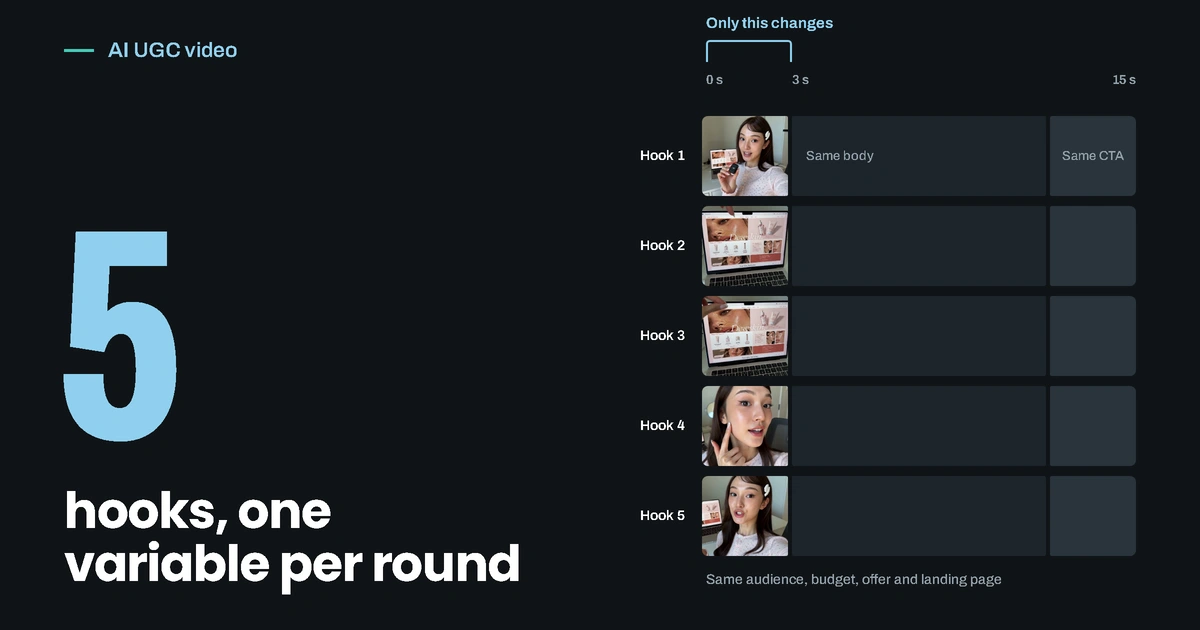
Whatever the platform, use the same label on every variant of a test, or the label turns into a second variable. The AI UGC ad testing workflow explains why.
A pre-launch checklist for AI UGC ads in the UAE
- Map every ad to the account that publishes it: your personal profile, the company page, a resident creator or a visiting creator.
- Get each creator's permit number in writing before you pay, and confirm the ad will go out from the account linked to that permit.
- For visiting creators, confirm which licensed UAE agency files the visiting permit and when it expires.
- Pick a generic AI presenter. Use no real person's likeness without written consent, nobody who resembles a public figure, and no Emirati national dress.
- Read the script for claims. Name the product and the company clearly, keep first-person experience out of the presenter's lines, and cut any number you cannot prove.
- Make the ad recognisable as an ad. Gulf News quoted the Council's condition that an advertisement "must be clearly identifiable and not ambiguous or misleading".
- Switch on the AI label where each platform offers one: TikTok's AI-generated content disclaimer, YouTube's AI use setting at upload and Google's AI label setting. On Meta, preview the ad and check About this ad.
- If someone else schedules your posts, agree in writing who switches the label on. On our one-time social media distribution order, you turn it on when you publish or ask us to do it when we schedule.
- Keep a file per campaign: the signed-off script, screenshots of each label, creator permit numbers and the date you last checked the rules.
Short answers on the permit and AI labels
Do I need an Advertiser Permit to run AI UGC ads for my own SaaS?
Not for posts on your own personal account about a company you own, going by the exemption Gulf News and The National reported at launch. Ads from your company page are less clear, because the NMA's permit page does not address them. Any creator who posts your ads needs a valid permit of their own.
Do AI-generated presenters need a label in the UAE?
On the major platforms, yes. TikTok lists AI-generated media among its mandatory ad disclaimers, YouTube requires disclosure of realistic AI content, and Meta says it labels AI ads it detects. The NMA's content standards say nothing about AI labels. Separately, AI images of UAE public figures or national symbols need prior official approval.
Check the rules with the regulator before each campaign
This guide is general information and is not legal advice. We checked the NMA's permit pages and each platform's policy on 21 November 2026, and pages like these change. For a ruling on your own campaign, contact the National Media Authority through nma.gov.ae or ask a lawyer licensed in the UAE.
If you want the scripts and AI presenter videos made to these rules, the AI UGC video service page lists what each order includes.