Social media management means someone runs your accounts for you: the plan, the content, the posting, the replies and the monthly report. Social media distribution is one slice of that job. It takes content you already have, cuts a version for each platform, writes the captions and schedules the posts. A founder who records good material and never gets around to posting it needs distribution. A team that needs a plan, new content and someone answering comments every day needs management.
What social media management covers
Brandwatch's glossary (opens in a new tab) defines social media management as "the ongoing process of planning, creating, publishing, and analyzing content across social media platforms while engaging with audiences". Sprout Social's guide adds paid social, influencer and creator partnerships, and managing the team itself. Put together, a management scope can include:
- A strategy: which platforms, which topics, how often, and what counts as a result.
- Content made for you: copy, graphics, short videos and sometimes shoots.
- A monthly calendar, plus publishing and scheduling.
- Community management: replies to comments, direct messages and mentions.
- Social customer care for questions and complaints that arrive through social channels.
- A monthly report on reach, engagement and conversions, with changes for the next month.
- Paid social campaigns and creator partnerships, when they are in scope.
Sprout Social also separates two roles inside that list. Its comparison describes a social media manager who works on the brand's own pages, sourcing, scheduling and answering, and a community manager who talks with members under their own name.
What distribution covers, and what it leaves with you
Distribution starts from finished content. Here is the scope of our social media distribution service:
- You send videos or images, made by us or by anyone else.
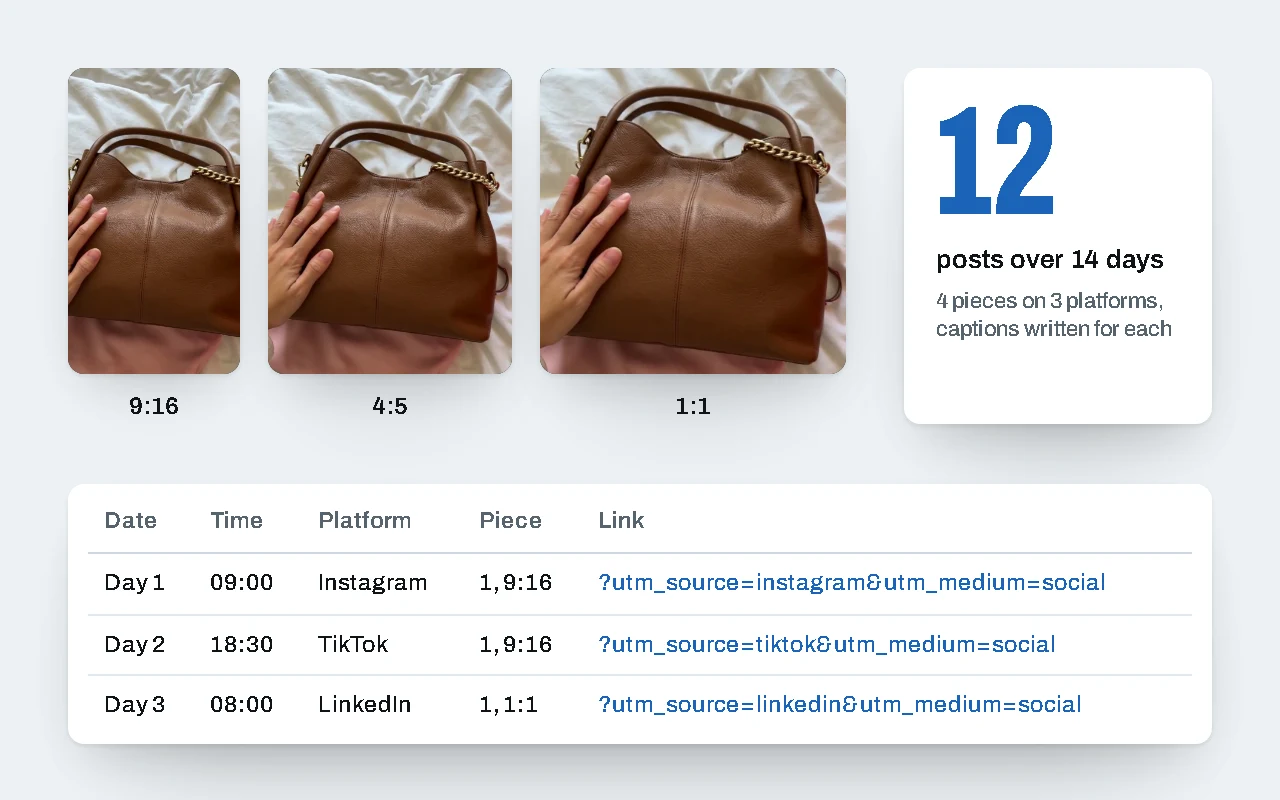
- Each piece is resized per platform: 9:16, 1:1 or 4:5.
- Each platform gets its own caption, with hashtags where the platform uses them.
- Posts are scheduled on up to three of Instagram, TikTok, YouTube Shorts, LinkedIn, X and Facebook, with UTM-tagged links.
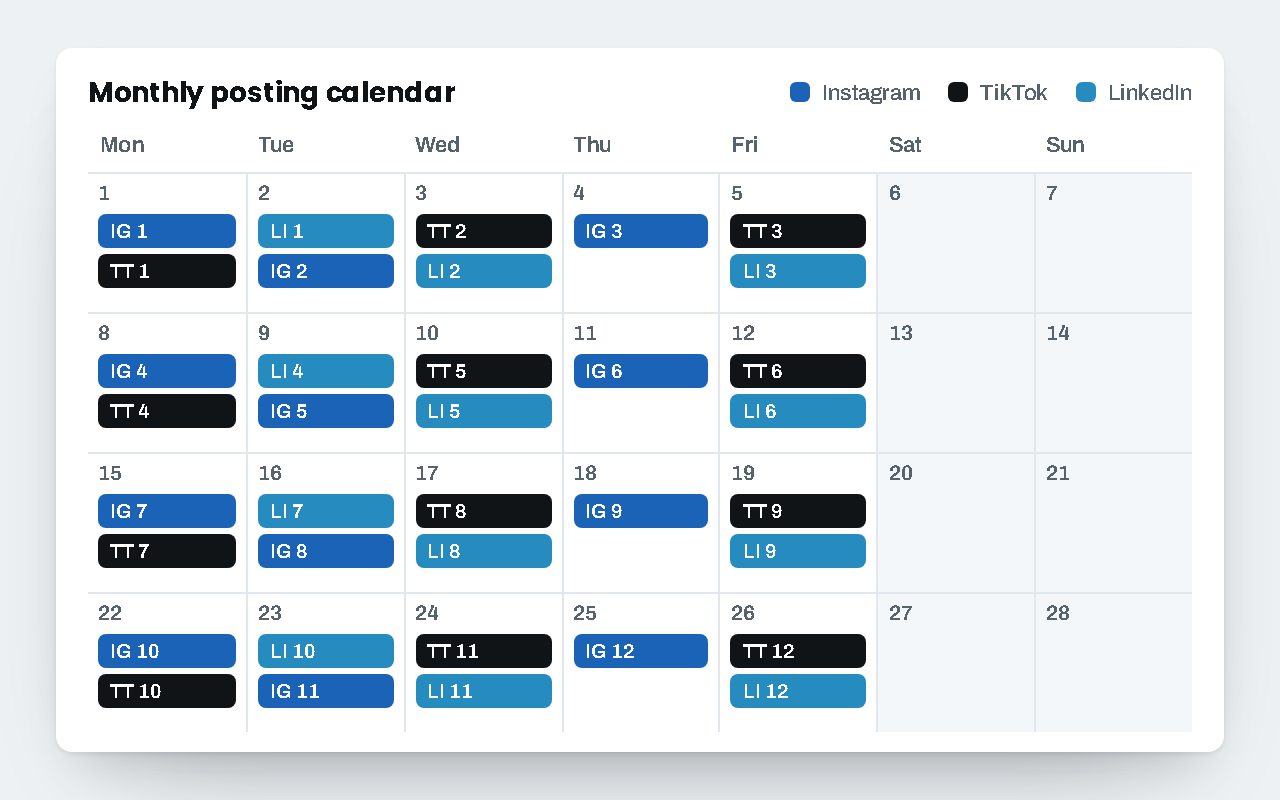
- You get a posting sheet with dates, times, captions and links. On the monthly plan, the calendar arrives before the month starts and a list of what went live follows at month end.
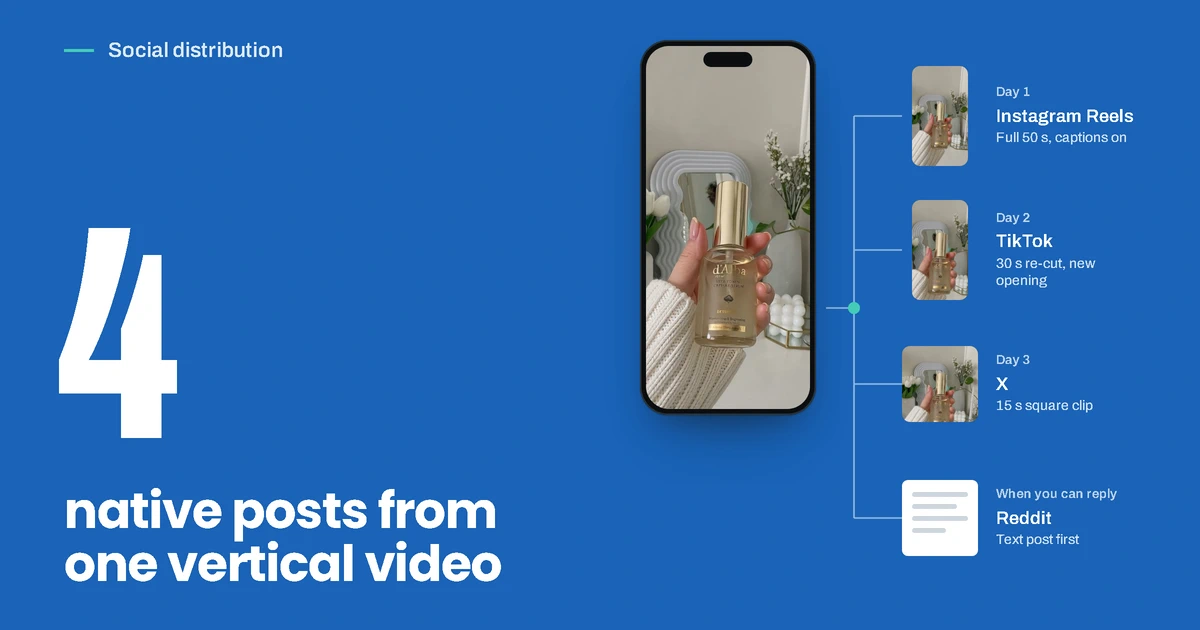
Posts go out from your own accounts through the access each platform allows. On LinkedIn, for example, the Content admin role (opens in a new tab) lets someone create and manage Page posts, so nobody needs your password. Where a platform blocks delegated posting, you get the files, captions and schedule and publish them yourself. The guide to how one video becomes four native posts shows what changes from feed to feed.
What distribution does not do
- Make the content. The videos and images come from you, or from a separate production order.
- Reply to comments, answer direct messages or moderate threads.
- Decide your strategy: which platforms, which audience, which message.
- Run or boost ads.
- Promise reach, followers or sales.
- Post to Reddit. Each community there sets its own rules on promotion, so that post stays with you.
Who each one fits
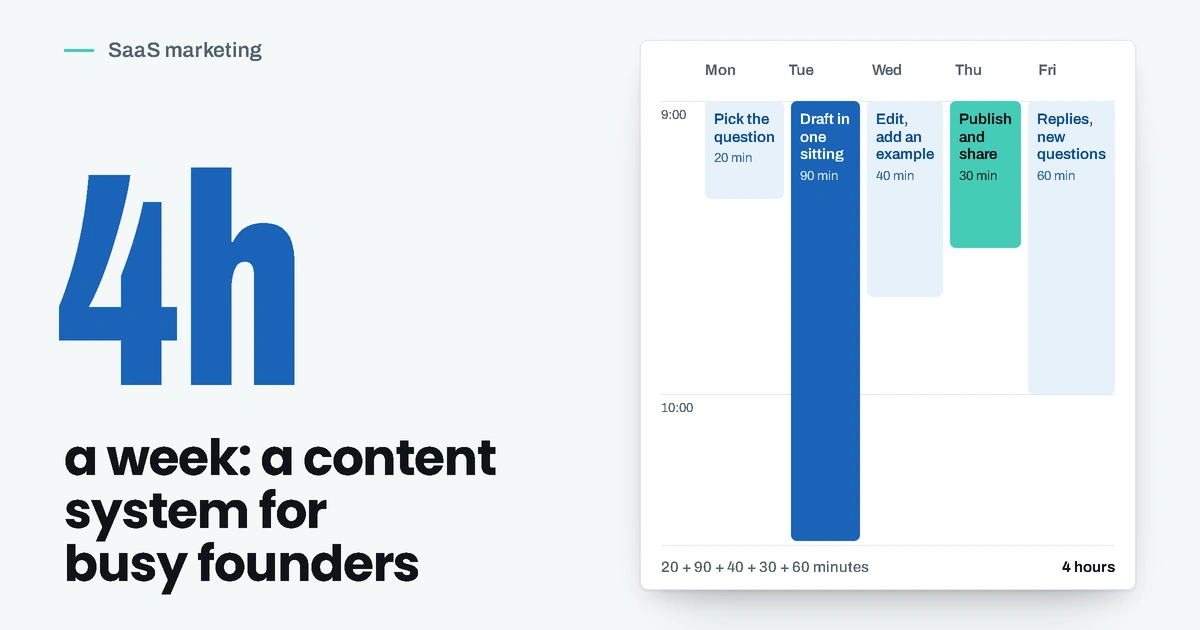
Distribution fits a founder or small team that already produces material: a weekly screen recording, launch clips, a customer webinar, a folder of feature screenshots. What is missing is the hour it takes to cut three versions and write three captions, so posting slips to whenever someone has a free evening. If the material itself is thin, start with a weekly content routine before you pay anyone to post it.
Management fits a team with no steady content, with comments and direct messages waiting days for an answer, or with no agreed plan for which platforms matter. It also fits a product whose customers use social channels for support, because customer care is part of a management scope.
What drives the cost of each
Management is mostly people's time, so its price moves with:
- The number of platforms and posts per week.
- How much content is made from scratch, and whether it needs shoots or video.
- The reply window: office hours only, or evenings and weekends too.
- Languages. Replies in Arabic and English need someone who writes both well.
- How deep the reporting goes, and whether paid campaigns are managed as well.
Distribution has fewer moving parts: how many pieces, how many platforms, the captions and one revision round. Under our packages, scheduling tool fees and ad spend stay with you, and both packages show a fixed AED price on their product pages. If you are still deciding how much of a small budget goes to social at all, the budget split calculator gives you a starting split by stage and goal.
Decide in five questions
- Do you already have content every week? If yes, distribution can work from it. If no, you need content made first, through a management retainer or a production service such as AI UGC video.
- Who answers comments and direct messages within a day? If someone on your team can, distribution is enough. If nobody can, that gap is community management.
- Do you know which platforms and topics matter to your buyers? If you do not, you need strategy, and distribution does not include it.
- How many platforms do you need? Our distribution packages cover up to three. More than that points to a bigger scope.
- Do you need analysis and recommendations each month, or paid campaigns? Distribution gives you a list of what went live, with links. Analysis and ad management belong to management.
Worked example: a made-up Dubai scheduling app
Shiftnest is a fictional SaaS that plans staff shifts for small clinics in Dubai. The team is two founders, one developer and one customer success lead. Every Tuesday the CEO records a 60-second screen video of something new, and there is a folder of feature screenshots plus two launch clips from the last release. Clinic managers find Shiftnest on LinkedIn and Instagram. Posting happens when somebody has a free evening, which in a release month means almost never.
Their five answers:
- Content: yes, a new video every week and screenshots to fill the gaps.
- Replies: the customer success lead checks comments and messages for half an hour each morning, in English and Arabic.
- Strategy: they know their buyer (clinic managers) and their one message (shift plans without double bookings).
- Platforms: LinkedIn, Instagram and YouTube Shorts.
- Reporting: they track sign-ups in their own analytics, so a list of live posts with links is enough.
That points to distribution. They try one round on the launch clips first, then move to Monthly Social Media Distribution. Each Tuesday video becomes a LinkedIn post, a Reel and a Short, each with its own caption, and the screenshots go out as LinkedIn and Instagram posts between videos. The calendar arrives before each month starts, the mid-month change round absorbs a pricing update, and they ask for later posting times during Ramadan, when working hours change. Shiftnest keeps the replies. They will look at management again at the end of the quarter if comments outgrow the morning half hour or they decide to run paid campaigns.
Rules that apply to both
Whoever posts, the account stays yours and the platform rules stay the same. TikTok's integrity policy (opens in a new tab) prohibits automation tools, scripts and other tricks designed to bypass its systems, and says it removes fake likes, followers and other inflated signals. Meta's inauthentic behavior policy covers fake accounts and artificially boosting the popularity of content. Bought followers, bots and engagement pods put the account at risk under either model. If a video is AI-generated, switch on each platform's AI label when it posts.
Questions founders ask about this choice
Is social media distribution the same as social media management?
No. Distribution takes content you already have, resizes it, writes a caption for each platform and schedules the posts. Management covers the whole account: strategy, content creation, publishing, replies, customer care and reporting. Distribution is the publishing slice of management, done for content that already exists.
Who answers comments if I only buy distribution?
You or someone on your team. A distribution service schedules the posts and hands over the schedule, and replies, direct messages and moderation stay with the account owner. Book a short daily slot to check comments and messages on every platform you post to, and decide who covers weekends.
When should a SaaS move from distribution to management?
When the work nobody is doing becomes the problem: there is no steady content to post, comments and messages wait days for an answer, or you need a plan for platforms, topics and paid campaigns. Until then, distribution keeps posting regular while your team handles the conversations.
If your five answers point to distribution, a one-time posting round is the smallest way to try the routine.